g
pfi2
pfi1
pfi3
UpBar

Innovation in Inversion

S. Ghosh

Sugar is the most popular sweetener in the market. It also possesses preservative, bulking, flavour enhancing and texturing properties. The major reason for its popularity are its ready availability, low cost, simplicity of production, purity and long history of usage. If hydrolysed, it produces invert syrup which manifests the above properties by many folds.

Innovation is the key to success. Innovation needs to be persuaded vigorously for the upgradation of technology so that transformation in product quality and betterment of life are achieved. A breakthrough innovation has been achieved in the field of sweetener through Pass it on to a friendbiotechnological production of invert sugar (IS). A radical change in the quality of food and pharmaceutical products has been achieved by replacing sugar with invert sugar. The technology has revolutionised the market in such a way that new industrial units are being set up to meet the diversified application of invert sugar. R and B activities are also being carried out.

Sugar is the most popular sweetener in the market. It also possesses preservative, bulking, flavour enhancing and texturing properties. The major reasons for its popularity are its ready availability, low cost, simplicity of production, purity and long history of usage. If hydrolysed, it produces invert syrup which manifests the above properties by many folds. Although, this information was known, no industrial unit for IS production was started in the country due to the absence of proper technology.

The old age method of acid inversion was the main tool for IS and few actual users adopted this technique for their requirement. This old age method is crude, results non uniform products including formation of highly neuro toxic hydroxy methyl furfural (HMF) and furfural.

The above crude acid hydrolysis can be improvised by ion exchange resin. The uniform product quality is obtained by adopting this method. Most of the manufacturers in the world use the resin technology for IS production. However, the main constraints of the process are operational difficulties, above 45% sugar solution leading to blockage of flow, high cost of resin, carbonisation, high degree of effluent generation and formation of HMF.

The said coversion can also be achieved by enzymatic action of invertase on sugar. Enzyme being target oriented and mild in nature, does conversion with almost same percentage efficiency without any byproducts formation. However, for commercial success of the process, it is necessary to immobilise a cheap source of invertase for its repeated use and by utilising concentrated sucrose solution to avoid upstream and down stream processing.

A number of attempts have been made to produce IS using immobilised enzyme route. Most of the reported work failed to see the ray of light of commercialisation for a number of reasons particularly the absence of cheap right quality food grade, immobilised system having high biocatalytic activity and stability under practical operating conditions.

A commercially viable technology has been developed by Food Technology Department of Bhabha Atomic Research Centre to produce concentrated IS by a single step biocatalytic process from concentrated aqueous solution of sucrose. The substrate sucrose is passed through bioreactors containing immobilized invertase. Yeast cells (S. cerevisiae) are used as source of enzyme invertase, tailor made to obtain the maximum biocatalytic activity of the enzyme and then immobilized in an inexpansive inorganic matrix. The matrix used is very cheap, easily available, inert, has high mechanical strength, density and possess high thermal and dimensional stability. The matrix is resistant to microbial attack and nontoxic. The bioreactor once packed can be used continuously for several months (6-8 months). The product conforms to the BP standards and is absolutely free from HMF and thus absolutely safe for use. The process is virtually maintenance free and simple in operation. It does not create any problem of pollution or effluents and absolutely free from hazards.

The process was scaled up from bench scale level of 3 Kg/day to 500 Kg/day commercial plant leading to successful scale up to 10 MT/day. A number of industrial units are operating based on the technology. The product finds numerous applications. The process is first of its kind in the world commercialised for the production of invert sugar based on whole cell immobilisation of yeast cells.

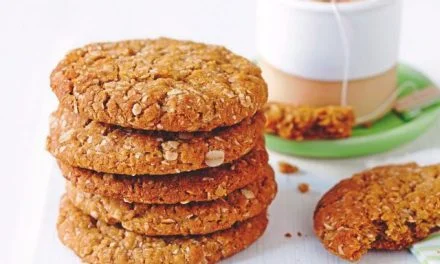
IS is 1.3 times sweeter than sugar and, therefore the quantity used for sweetening any item is greatly reduced. It tastes like honey and therefore can be used as a substitute for honey. As it is available in a ready-to-use liquid form, the problem of storing is minimised. It is free from dental carioneity (commonly known as dental caries) because of its unique property of not reacting with body calcium, restricting the formation of dental caries. It is a natural preservative, and has a longer shelf life. It does not produce off-odour or off-taste when stored for a long period of time and used in higher concentration. It does not crystallise at high concentration and lower temperatures, thereby minimising crystal formation in ice-cream. It caramelises at lower temperature, thereby reducing the baking temperature from 350 degrees to almost 200 degrees, and giving a rapid crust colour. It assimilates faster in the stomach as compared to ordinary sugar. It has a higher degree of solubility than sugar. It has higher osmotic pressure than sugar. It maintains the calcium balance in the body. IS is better than other sweeteners that are often used, like saccharine, cyclamate and aspartame because of the quality of sweetness and also because it does not produce off-flavour at high usage levels. Its use leads to formation of spongier cakes and ice-cream devoid of crystals, crispier and evenly baked biscuits without cracks, caramalisation at a lower temperature and therefore, reduced time taken to bake cakes. IS is India's answer to Europe's High Fructose Corn Syrup (HFCS), a substitute for sugar. IS is finding new application in the fields of tobacco, face cream, shoe polish etc.

Initial market data shows that there is a tremendous growth potential of the product particularly in view of the changed economic, scenario of our country. Indian manufacturers can compete in international market by adopting the technology invented in the country (single step) which is superior and cheap to multi steps HFCS technology. Moreover, in India, production of sugarcane, a plant that fixes more carbon then corn is abundant and thus scope for production of invert sugar through inversion is the most appropriate choice of technology.

______________
Author is a faculty member of Food Technology Division, Bhabha Atomic Research Centre, Mumbai

________________________________________________________________________
Please do not forget to send your views about the article to the
Editor or Author


Contact Webmaster@pfionline.com with comments or questions regarding this site. 
© Copyright, Computype Media, All rights reserved
.