Food on the Rails – The New ‘Mantra’ PDF  | Print |  E-mail

Food on the Rails – The New ‘Mantra’

—V.H Potty

railsThe objective of the new ‘mantra’ of in-house catering is ‘to upgrade’ the quality and ‘reduce’ the cost of food served in railway stations and in all important trains. A larger issue to be addressed is whether IR can provide better service to the passengers than that offered by the private players? In all likelihood, it is a Utopian dream, writes VH Potty.

The Minister for Railways, in her recent budget speech, made the announcement that railway catering would be taken over from the private sector players, the objective being ‘to upgrade’ the quality and ‘reduce’ the cost of food served in railway stations and in all important trains. Intention may be noble but the past experience is just otherwise because post-independent India has been a mute witness to the progressively declining standards of government controlled services reflecting the ground reality and no lesson seems to have been learnt.

Indian Railway Catering and Tourism Corporation (IRCTC) as well as Department Catering of Indian Railways (IR) are involved in providing food services to the passengers at present to a limited extent, rest being outsourced to private contractors. According to IR, there are 10,752 static catering units servicing 260 pairs of trains through pantry cars and train side vending units serve another 80 trains. While IRCTC has 1428 catering units, Catering Department of IR runs another 56 units. In contrast number of private catering units under different zones run into 3473 and another 5797 private units are under the IRCTC monitoring orbit.

For serving running trains, base kitchens are set up in major cities from where the trains start or pass through during long journey. IRCTC has 4 base kitchens in Delhi, Mumbai, Kolkatta and Patna. Private caterers have invested heavily in setting up about 100 base kitchens across the country to provide food service to more than 600 trains in a day. No doubt providing good, affordable and safe food is the responsibility of the IR its efficacy is still to be felt by the traveling public.

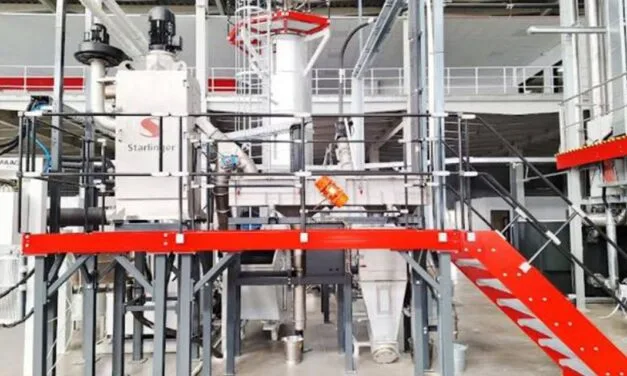
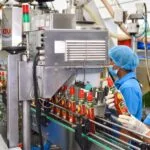
If the new ‘mantra’ of in-house catering is to be implemented, IR will have to set up at least 30-35 more base kitchens to serve all the Rajdhani and Shatabdi trains numbering 32 at present. According to IRCTC officials, even setting up a small kitchen would cost Rs 3 crore while it will be more than 3-4 times when it comes to establishing a large base kitchen with necessary facilities. The manpower needs to be expanded several fold and it is likely that once they are inducted into the railway catering service their tenure will become permanent. If the experiment of in-house catering fails for some reasons or the IR reverses the policy, these employees can be a permanent drain on the railway establishment. More appropriate would be to mechanize many of the preparations that could save manpower significantly. Today automated equipment are available for preparing many cuisines like chapathi, idli, dosa, poori, vada, bonda, bread and parotha which are the basic items on demand from the traveling public and base kitchens can be equipped with these machines for continuous mass production. Advanced packaging materials and packing machines must be used to make the preparations well protected and presentable.

A larger issue to be addressed is whether IR can provide better service to the passengers than that offered by the private players? In all likelihood, it is a Utopian dream. IR is used to make money from the catering contractors through heavy licensing fees and forcing them to pay exorbitant recurring royalties from their turn over. All know whatever has happened to the pompous decision of the previous minister in making use of earthenware pots and cups compulsory for serving food and beverages in IR stations and trains! Solution to bettering the quality of food lies in making monitoring more stringent and deployment of technically experienced food technologists with well-equipped safety assessment facilities to shoulder the responsibility. Probably IR can do a better job in promoting food industry in the country than MoFPI because of the vast captive clientèle it has and joining hands with some of the major corporates by involving them in running the pantry car system may be of mutual benefit to all concerned, the passengers, IR and the industry.


Managing IPR

IPR

Managing Intellectual Property

“Managing Intellectual Property” is a series of articles on intellectual property rights in the trade related matters. The series covers various dimensions of IPR in the form of simplified legal text with suitable cases studies. We hope the series will benefit the professionals, policy makers, executives, managers, researchers, traders and other stakeholders. Read More

Current Topics

Current Topics

‘Current topics’ provides the rapid advances in the sector that have taken place in the recent past. The series is being contributed by Dr. V.H Potty – our editorial consultant and Deputy Director (Rtd), CFTRI. He is the doyen of food processing industry in India. We feel that an intensive review of the major issues would be of great value to our readers.

Read More

Recent Development

Recent Development

New developments take place every now and then, which results in the overall development of the sector. Dr. Rajat K. Baisya — our editorial consultant, and professor of marketing and strategic management at department of management studies, IIT Delhi — keeps a keen eye on these developments in this sector as and when they happen. The series has recently passed its 120 mark in its print version.
Read More

Cold Chain

Cold Chain Management

Keeping in view the importance of freezing and cold chain in food business PFI has decided to introduce a new series of article ‘A to Z of Frozen Food Operation’. The series contributed by O S Gautam — a known food consultant and Director, Delicacy International — is being presented here. We hope our readers will be benefited by his experience and give us their feedback.
Read More

Supply Chain

Supply Chain

“Managing Supply Chain & Marketing of Food Products” The purpose of initiating this series of articles is to discus some important dimensions of food business, which can be of some help for decision makers at various levels in food business. This series looks into macro-economic policy parameters, which affect food consumption and retailing patterns and consumer behaviours. We will also evaluate various micro-level developments in food business world and their impact on food business, food retailing and consumer behaviour.
Read More